

 English
 German
 French
 Russian
 Spanish
 Japanese
 Korean
 Portuguese
 Ukrainian
 Arabic
 Italian
Quality Control Measures in Insulated Bottle Production: Ensuring Excellence at Pflask
At Pflask, delivering premium insulated bottles that blend durability, thermal efficiency, and safety is at the heart of our manufacturing process. Behind every sleek, reliable insulated bottle lies a rigorous series of quality control (QC) measures designed to exceed industry standards and customer expectations. Let’s explore the key protocols we implement throughout production.
1. Raw Material Inspection: Building a Strong Foundation
The journey to a high-quality insulated bottle begins with scrutinizing every raw material:
- Stainless Steel (Core Material): We verify the grade (e.g., 304 or 316 stainless steel) for food safety, corrosion resistance, and thermal retention. Material samples undergo spectral analysis to ensure purity and compliance with global food-contact standards (e.g., FDA, LFGB).
- Plastic Components: Caps, lids, and accessories are tested for food-grade safety, UV stability, and durability. We only use BPA-free, phthalate-free plastics certified for long-term use with hot/cold liquids.
- Seals & Gaskets: Rubber or silicone seals are inspected for elasticity, heat resistance, and airtightness. Samples are subjected to temperature cycling (-20°C to 120°C) to ensure they maintain integrity over time.
2. In-Process Monitoring: Precision at Every Step
Our production line integrates real-time monitoring to prevent defects during key manufacturing stages:
- Injection Molding (for Plastic Parts): Sensors track temperature, pressure, and cycle time to ensure uniform wall thickness, smooth surfaces, and precise thread dimensions (critical for leak-proof lids).
- Welding & Assembly: Automated systems monitor weld strength (for stainless steel shells) and alignment, using X-ray or ultrasonic testing to detect internal gaps that could compromise insulation.
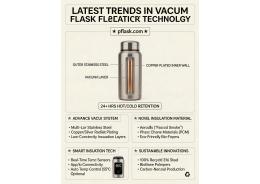
- Vacuum Insulation Process: We measure vacuum pressure and monitor the “getter” (a material that absorbs residual gas) to ensure the insulation layer retains ultra-low pressure, maximizing thermal performance.
3. Semi-Finished Product Checks: Catching Issues Early
Before final assembly, every component undergoes a multi-point inspection:
- Stainless Steel Shells: Visual and tactile checks for dents, scratches, or uneven surfaces. A laser scanner verifies the bottle’s curvature for a perfect fit with the inner liner.
- Lids & Closures: Torque testing ensures lids screw on/off smoothly (without stripping) and maintain consistent tightness. Thread profile analysis confirms compatibility with bottle necks.
- Insulation Layer Integrity: A thermal imaging camera detects hot/cold spots, indicating gaps in the vacuum seal or uneven insulation application.
4. Final Product Testing: Validating Performance & Safety
Finished bottles undergo a battery of tests to ensure they meet (or exceed) our strict standards:
- Thermal Performance: Bottles are filled with boiling water (or ice water) and tested over 24+ hours to verify heat/cold retention (e.g., 6-hour heat retention ≥ 60°C, 12-hour cold retention ≤ 10°C).
- Leak-Proof Testing: Bottles are inverted and pressurized (up to 2x standard usage pressure) to ensure no liquid escapes—critical for bags or backpacks.
- Drop & Impact Resistance: Bottles are dropped from 1.2 meters (simulating real-world accidents) onto concrete; only those with zero damage to the shell or insulation pass.
- Food Safety Compliance: Random samples are sent to third-party labs to test for BPA, phthalates, and heavy metals, ensuring full compliance with FDA, LFGB, and EU food-contact regulations.
5. Compliance & Certification: Meeting Global Standards
Pflask’s insulated bottles are certified to meet international standards, including:
- FDA (US Food & Drug Administration): For food-contact safety.
- LFGB (German Food, Consumer Goods, and Feed Code): Stringent European safety standards.
- ISO 9001 (Quality Management): For consistent manufacturing quality.
- ISO 14001 (Environmental Management): For eco-friendly production practices.
We undergo annual audits by independent bodies to maintain these certifications and continuously improve our processes.
6. Continuous Improvement: Learning From Feedback
Our QC system doesn’t end with production. We:
- Analyze customer feedback (e.g., reviews, warranty claims) to identify potential improvements.
- Conduct internal “failure mode analysis” to proactively address risks in new product designs.
- Invest in new testing technologies (e.g., AI-powered visual inspection) to enhance accuracy and speed.
By embedding these quality control measures at every stage—from raw materials to finished products—Pflask ensures that every insulated bottle delivers the performance, safety, and durability our customers trust. Whether you’re sipping coffee on a hike or hydrating at the office, our QC process is the invisible guarantee behind every drink’s perfect temperature.