

 English
 German
 French
 Russian
 Spanish
 Japanese
 Korean
 Portuguese
 Ukrainian
 Arabic
 Italian
Sourcing Drinkware: How to Differentiate Between a Trading Company and a Real Factory
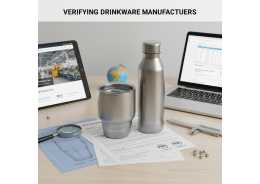
When sourcing drinkware (e.g., water bottles, tumblers, insulated flasks), distinguishing between a trading company and a real factory is critical to avoid hidden costs, quality issues, and delivery delays. This guide shares practical strategies to identify genuine manufacturers, using insights from pflask.com (a leading drinkware factory) as a reference.
1. Verify Production Facilities
A real factory owns production infrastructure (e.g., assembly lines, molding machines, quality control labs), while trading companies act as middlemen with no physical production base. To verify:
- On-Site/Video Audits: Request factory tours (in-person or via video). A genuine factory like pflask will showcase its production lines (e.g., stainless steel welding stations, plastic injection machines), warehouses, and R&D labs. Trading companies often struggle to provide real-time factory footage or use stock images.
- Equipment & Scale: Factories invest in specialized machinery (e.g., powder coating systems for insulated flasks). Check if the supplier’s website (like pflask.com) displays equipment photos or mentions production capabilities (e.g., “50,000 units monthly capacity”).
2. Customization Capabilities
Real factories excel at OEM/ODM (custom design and manufacturing), while trading companies typically resell existing products:
- Design & Engineering: Factories have in-house design teams (e.g., pflask’s R&D department) to create custom molds, logos, or product structures. For example, pflask offers services like logo laser engraving, color matching, and ergonomic redesign. Trading companies may only offer “off-the-shelf” products or outsource customization (leading to longer lead times and higher costs).
- Sample Development: A factory can produce prototypes quickly using its equipment. Ask for a custom sample (e.g., a flask with your brand’s logo) – a real manufacturer will share design sketches, mold costs, and sample timelines, while a trading company may hesitate or quote unrealistic fees.
3. Pricing & MOQ (Minimum Order Quantity)
Analyze cost structures and order requirements:
- Price Transparency: Factories quote based on raw materials (e.g., 304 stainless steel cost), labor, and overheads. Their prices are competitive (no middleman markup). Trading companies often add a margin, so their quotes seem lower initially but include hidden fees (e.g., “handling charges”).
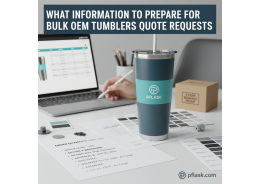
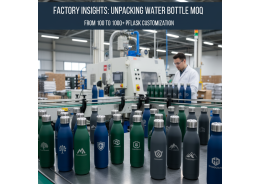
- MOQ Flexibility: While factories may have higher MOQs (e.g., 1,000 units for a custom flask), they offer volume discounts. Trading companies might accept low MOQs (e.g., 100 units) but charge premium prices per unit. Compare quotes: a factory’s price per unit drops significantly with volume, while a trading company’s discount is minimal.
4. Supply Chain Transparency
Real factories control the entire production chain, while trading companies source from unknown suppliers:
- Quality Documentation: A factory provides material certificates (e.g., FDA-approved plastics, food-grade stainless steel), production checklists, and third-party test reports (e.g., SGS, ISO). pflask, for instance, shares quality control processes (e.g., leak tests, insulation performance checks) on its website.
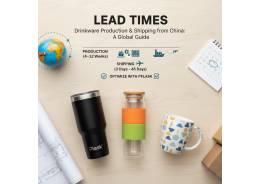
- Lead Times: Factories can adjust schedules based on raw material availability. Trading companies rely on sub-suppliers, so delays (e.g., “our vendor is backlogged”) are common. Ask for a production timeline breakdown – a factory will outline “material procurement → molding → assembly → QC” stages, while a trading company may only give a vague “4-6 weeks” estimate.
5. Communication & Expertise
Assess how the supplier answers technical questions:
- Product Knowledge: A factory’s team (e.g., sales engineers at pflask) can explain technical details (e.g., “Our vacuum flasks use double-wall construction with copper plating for 24-hour heat retention”). Trading companies often struggle to answer questions about materials, manufacturing processes, or certifications.
- Responsiveness: Factories prioritize client communication (they want repeat business). They respond quickly to inquiries about production updates or design changes. Trading companies may delay responses (e.g., “we’ll check with our supplier”) or provide generic answers.
Case Study: pflask.com as a Real Drinkware Factory
pflask.com exemplifies a genuine manufacturer: - Production: Owns a 20,000+ sq.m facility with injection molding, welding, and finishing lines. - Customization: Offers OEM/ODM for tumblers, water bottles, and insulated flasks (e.g., custom logos, biodegradable materials). - Transparency: Publishes factory photos, quality reports, and sustainability initiatives (e.g., eco-friendly production). - Pricing: Competitive quotes with clear cost breakdowns (raw materials, labor, mold fees).
Conclusion
To source drinkware successfully, prioritize suppliers with production control, customization expertise, and transparent operations. Use the strategies above (factory audits, customization tests, pricing analysis) to avoid trading companies. Partnering with a real factory (like pflask) reduces risks, ensures quality, and unlocks cost savings. Remember: a factory’s website (e.g., pflask.com) will highlight its production capabilities, while a trading company’s site focuses on “product catalogs” without manufacturing details.